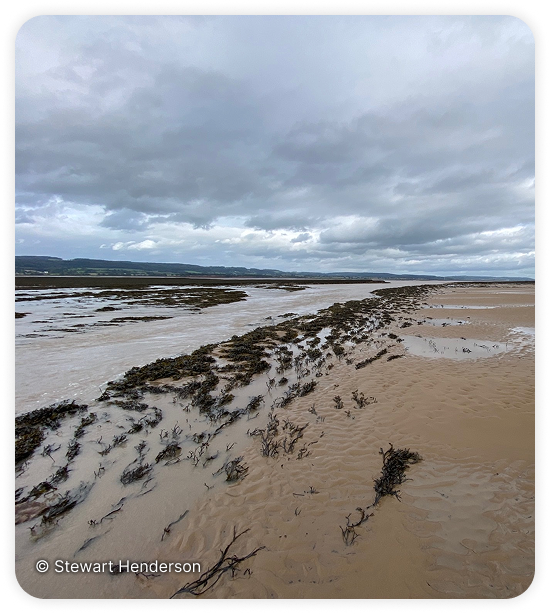

The Severn Estuary is the largest example of a coastal plain estuary in the UK, covering an area of almost 74,000 ha. It is unique for its immense tidal range, which affects both the physical environment and the diversity and productivity of the biological communities. The tidal range is the second largest in the world, reaching more than 13m at Avonmouth. These factors make the estuary important in representing one of the most dynamic estuarine systems in the UK, Europe and the world.
The Severn Estuary is comprised of an intricate and interdependent mosaic of subtidal and intertidal habitats, closely associated with surrounding terrestrial habitats.
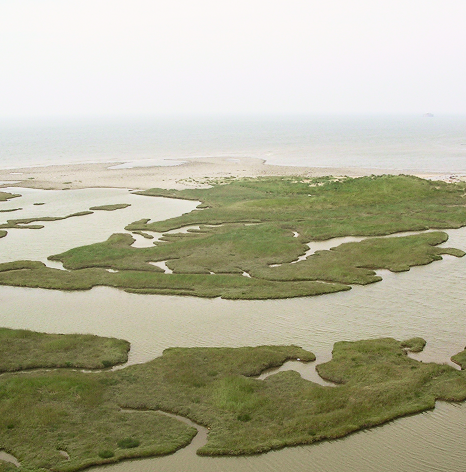
Atlantic salt meadows are a type of habitat comprised of a variety of different saltmarsh communities. They develop when vegetation colonises soft intertidal sediments of mud and sand in areas protected from strong wave action.
The Severn Estuary hosts the largest aggregation of saltmarsh in the south and south-west of the UK. It covers approximately 1,400 ha, representing approximately 4% of the total area of saltmarsh in the UK. Much of the Severn Estuary area is fringed by saltmarsh, including locations such as Aust, Peterstone Wentlooge and Clevedon Pill. It provides important feeding areas for waterfowl and a haven from the tides that flood the mudflats twice a day. The upper saltmarsh in particular makes ideal high water roosting sites.
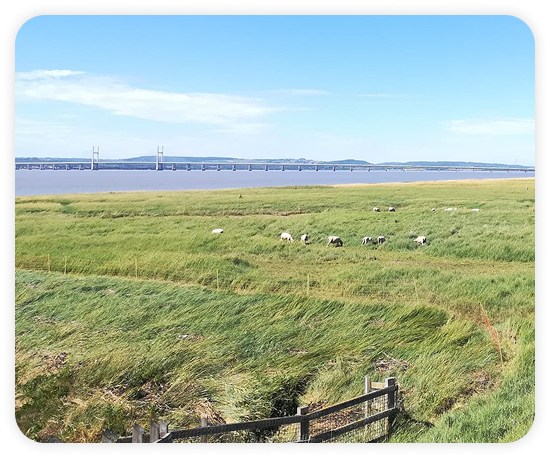
Intertidal mudflats and sandflats are submerged at high tide and exposed at low tide. They form a major component of estuaries and large shallow inlets and bays in the UK but also occur extensively along the open coast and in lagoonal inlets. The physical structure of the intertidal flats ranges from mobile, coarse-sand beaches on wave-exposed coasts to stable, fine-sediment mudflats in estuaries and other marine inlets.
The intertidal part of the Severn Estuary supports extensive mudflats and sandflats. These cover an area of approximately 20,300 ha – the fourth largest area in a UK estuary. There are extensive mudflats fronting the Welsh shore and Bridgwater Bay, and large banks of sands in the more central parts of the Estuary at Middle and Welsh Grounds.
The high biomass of invertebrates in the mudflats of the Severn provide an important food source for a diverse range and large number of fish and benthic predators. Mudflats also provide a valuable feeding, roosting and resting area for a wide range of species of wading birds and waterfowl.
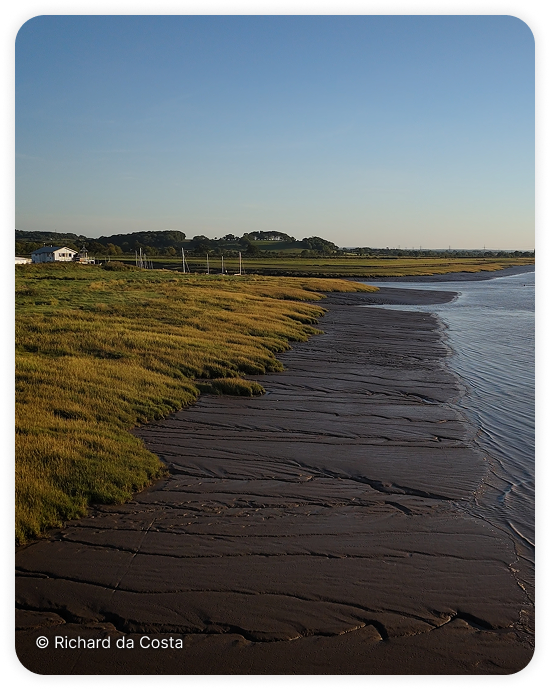
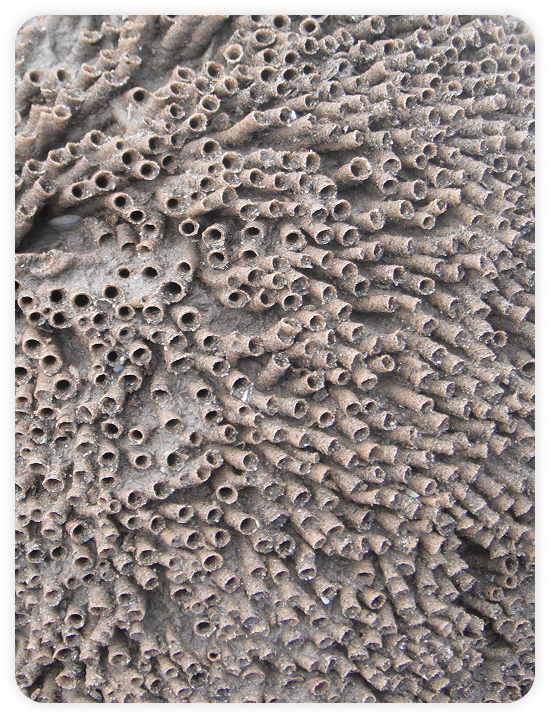
Reefs are rocky marine habitats or biological structures that rise from the seabed. The Severn Estuary has extensive areas of biogenic reefs, formed by the tube-dwelling worm, Sabellaria alveolata. This species of small worm constructs tubes using sand particles, to build honeycomb-like structures or reefs. Sabellaria reefs in the UK are predominantly an intertidal habitat, but the Severn Estuary is one of the few places where Sabellaria reefs also occur extensively in the subtidal, as well as the intertidal area.
There are patches of Sabellaria reef throughout the Estuary, although it tends to be more common on the English side. The subtidal Sabellaria reef tends to be in the outer parts of the Estuary, southwest of a line between Clevedon and Newport. The exact distribution of subtidal reefs in the Severn Estuary is unknown, partly due to the difficulties in sampling this habitat.
The reef structures also provide a habitat for many other species, often leading to higher species diversity within the reefs compared with surrounding substrates. Their cracks and crevices provide a habitat for many invertebrates, such as crabs, periwinkles, worms, barnacles and anemones, which would otherwise be absent. Subtidal reefs also support colonies of brittle stars and shrimp.
Subtidal sandbanks are permanently submerged sandy sediments. In the Severn Estuary subtidal sandbanks have a high mobility due to the extreme tidal conditions, resulting in a reduced biodiversity. They are largely restricted to the middle and outer parts of the Estuary. The subtidal sandbanks in the Severn Estuary change their shape over time and many are ephemeral in nature, although some are relatively stable and long established. The sandbanks of the Middle and Welsh Grounds are relatively permanent sandbank features in the Severn Estuary, along with other long-established sandbank features at Cardiff Grounds and in Bridgwater Bay.
Despite the significantly challenging conditions of the banks, they support very distinctive invertebrate communities, including a range of worms, shrimps, snails and bivalves. These species play a key role in providing a food resource for the fish assemblage feature under the SAC and Ramsar site. Since the banks also occur in shallower areas of the estuary, they are easily accessible to feeding waterbirds and serve as an important nursery ground for an array of fish species in the Estuary.