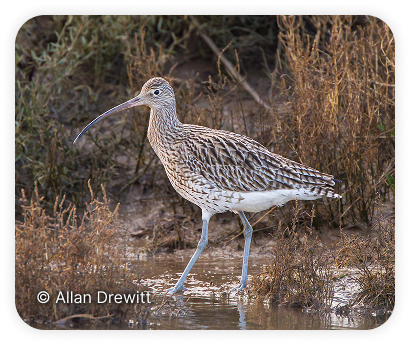
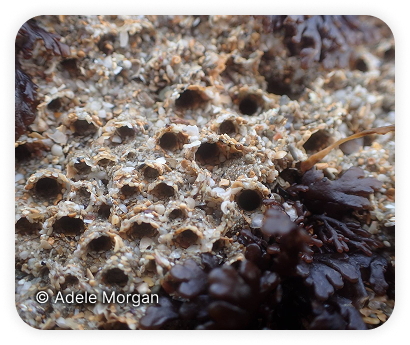
The environment of the Severn Estuary is unique and diverse, with many different habitats including wetlands, saltmarsh, sandy shores, rivers, rocky coasts, and biogenic reefs. In fact, the intertidal zone of mudflats, sandbanks, rocky platforms, and saltmarshes is one of the largest in the UK, covering an area of 9,971 ha2. Each winter the intertidal zones of the Severn Estuary host an average of 74,000 birds, which migrate from colder climates. Shelduck, oystercatcher, dunlin and ringed plover scour the muds for food and roosting grounds.
In the Estuary’s waters, fish such as sprat, herring and common goby are found swimming downstream to their spawning grounds. Their larvae will then swim up the Estuary to reach the more sheltered nursery grounds. River fish such as salmon, twaite shad and river lamprey make use of the 600 rivers which drain into the Estuary, that carve out a ‘blue motorway’ for boats, people, and animals alike. The River Severn is the longest river that drains into the Estuary at 180 miles (290 km) long, though many other rivers including the Wye, Usk and Avon also drain into the Estuary.
The nature conservation features of the SAC, SPA and Ramsar are laid out in sections below.